What We Do
Gutz Technologies is building tools that help people understand their own biology—and find interventions that actually work for them.
We’re developing at-home sampling kits that measure multiple aspects of a person’s biology: their gut microbiome, metabolism, proteins, and genetics. Our AI combines these measurements to build a digital twin—a personalized model of how someone’s biology works—and uses it to predict which interventions are most likely to help their specific symptoms.
How Digital Twins Work
Think of a digital twin like a weather forecast, but for your body. Just as meteorologists combine temperature, pressure, and wind data to predict tomorrow’s weather, we combine data from multiple biological systems to model how your body works.
Our AI doesn’t just take a snapshot. It learns how your biology changes over time, capturing interactions between your gut bacteria, metabolism, and immune system. This lets us predict how you’ll respond to different interventions—before you try them.
Under the hood, this is powered by a type of AI designed to learn patterns in complex, changing systems. Where standard AI sees a still photo, our platform sees the whole movie.
Our Current Focus: Autism Spectrum Disorder
We’re starting with autism because it’s a condition where the same diagnosis can look completely different from one person to the next. Our published research in Nature Neuroscience showed that by combining gut microbiome and molecular data, we could identify distinct subtypes of ASD with over 80% accuracy—a level of precision that opens the door to genuinely personalized care.
Why Our Approach Is Different
Most health tests look at one thing in isolation—your DNA, or your microbiome, or a blood panel. Each gives a partial view. We combine multiple biological layers, and the result isn’t just additive—it’s exponentially more accurate.
Beyond that, most AI finds correlations—patterns that appear together. Our platform identifies causes: which biological factors are actually driving symptoms, and what happens when you change them. This is what makes our predictions actionable, not just descriptive.
To make this possible, we built a new programming language from the ground up—designed specifically for constructing AI models that reason about cause-and-effect under uncertainty. This lets us coordinate specialized models across each type of biological data into a single, coherent picture. Combined with our database of over 1 million curated biological samples and methodology validated across multiple Nature publications, this gives us a foundation that single-test approaches can’t match.
Leadership Team
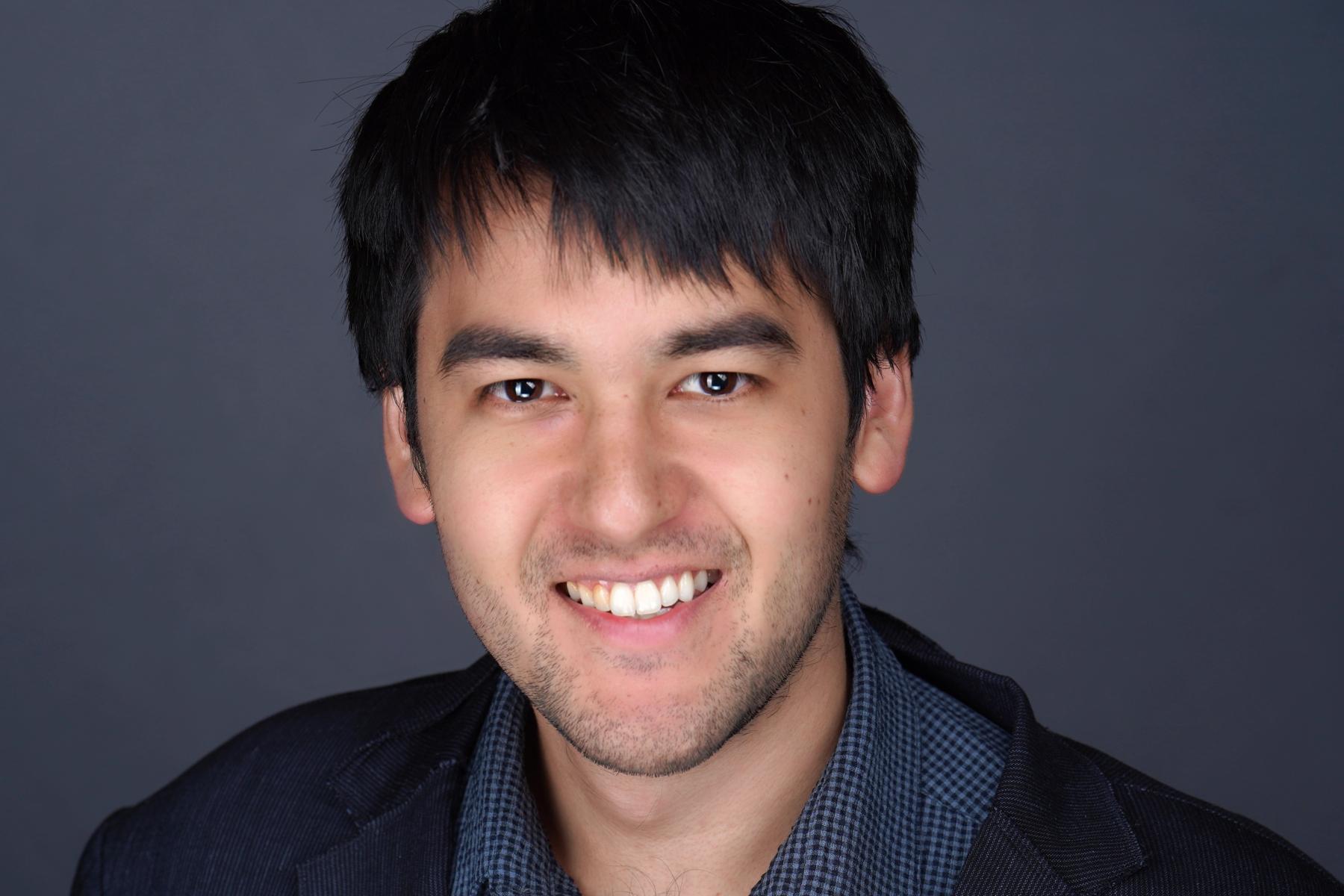
James Morton, PhD
Founder & CEO
Dr. James Morton is a pioneer in biostatistical and machine learning methodologies for multi-omics applications, with research published in Nature journals. He received his PhD in Computer Science from UC San Diego and founded Gutz Technologies in 2019 after serving as an investigator at the Eunice Kennedy Shriver National Institute of Child Health and Human Development (NICHD), where he led development of biostatistical methods for high-dimensional, multi-modal longitudinal modeling.

Mehrbod Estaki, PhD
Project Lead
Dr. Mehrbod Estaki is a microbiome researcher and bioinformatician with expertise in gut microbial ecology, community analysis, and high-throughput sequencing. He earned his PhD from the University of British Columbia and conducted postdoctoral research in the Knight Lab at UC San Diego, where he investigated the gut-brain axis. A contributor to the widely used QIIME 2 bioinformatics platform, Mehrbod brings deep experience in multi-omics data analysis, sequencing pipeline development, and microbiome-disease associations.

Colin Brislawn
Bioinformatics Consultant
Colin Brislawn is a microbiome bioinformatics specialist with extensive experience in amplicon sequencing analysis, multi-omics integration, and data visualization. Formerly a researcher at Pacific Northwest National Laboratory (PNNL), he has contributed to significant microbiome research and is an active developer in the QIIME 2 ecosystem, building tools for reproducible sequencing analysis. His work spans microbial ecology, high-throughput sequencing informatics, and open-source bioinformatics tool development.